

Nex Gen Retail Summit

Categories
Banking

This Is How Agentic Al Is Powering the Next Wave of Retail Growth

This Is How Agentic Al Is Powering the Next Wave of Retail Growth

Agentic AI in retail is redefining automation through self-learning intelligence that transforms retail operations and customer experience.

The New Frontier of Retail Intelligence

Retail has evolved from barcode scanners to self-checkouts, predictive analytics, and warehouse robotics. But a bigger shift is underway: from automation to Agentic AI in retail.

Unlike traditional systems that follow commands, Agentic AI learns, plans, and acts autonomously to achieve business goals. It does not just react; it decides. This next leap will dominate conversations at the NexGen Retail Summit 2026, where global leaders will explore how self-learning AI is reshaping commerce.

Where Retail Automation Stands Today

Retail automation has already transformed efficiency through robotic fulfillment, automated inventory tracking, and chatbots handling customer queries.

According to McKinsey, 78% of companies now use AI in at least one business function, proving automation’s mainstream presence. However, automation alone is reactive; it performs tasks efficiently without real initiative or reasoning. The industry’s next challenge is to make machines that not only follow orders but think ahead.

What Makes Agentic AI Different

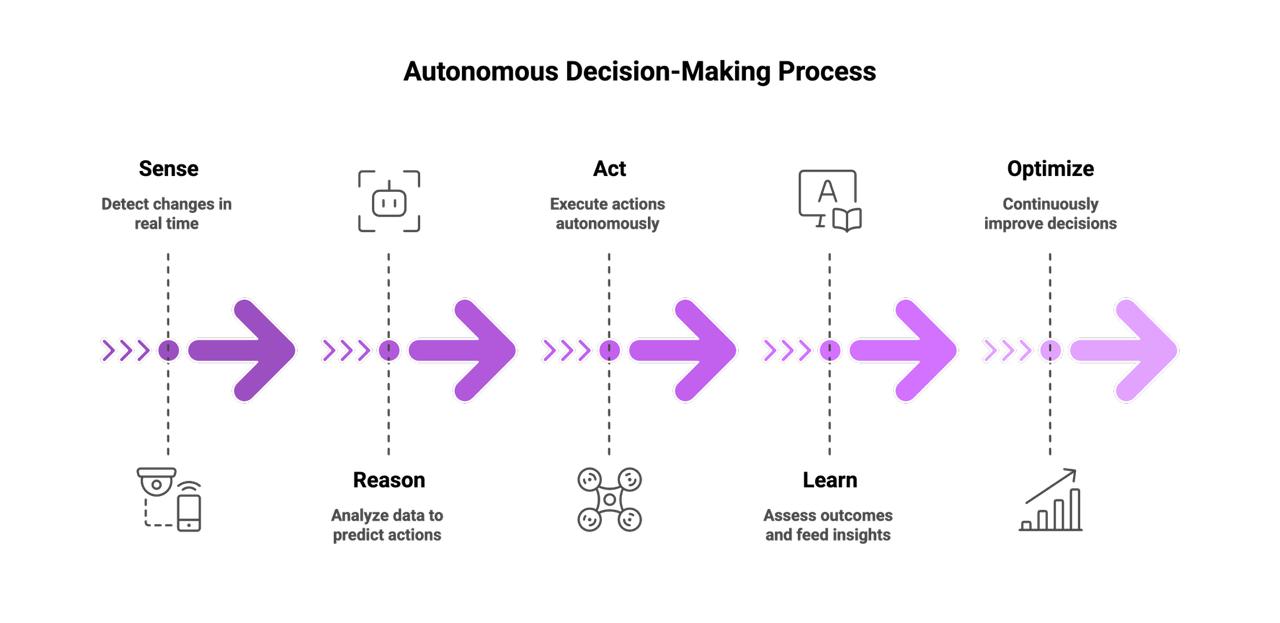
Agentic AI in retail takes automation to the next level. These AI agents can sense their environment, reason independently, and act without human direction. As IBM defines it, agentic systems go beyond generative AI by integrating goal-oriented behavior and continuous learning.

For example, instead of alerting a manager to low stock, an agentic system can automatically restock items, adjust supplier contracts, and update online listings in real time. Google Cloud highlights this evolution as the foundation for intelligent retail ecosystems that combine analytics, large language models, and IoT data to drive real-world actions.

Where Agentic AI Is Already Making an Impact

  1. Autonomous Supply Chains: Agents detect disruptions, reroute shipments, and reorder inventory automatically. Early adopters such as Walmart report faster restock times and fewer outages.
  2. Real-Time Pricing Optimization: Agentic systems continuously adjust prices based on demand, stock, and competitor moves to improve both margin and customer value.
  3. Intelligent Store Operations: Agents analyze foot traffic, energy usage, and staff schedules to optimize store performance and resource allocation.
  4. Personalized Customer Engagement: Virtual advisors act like digital store managers, understanding preferences and intent to offer curated recommendations instantly.

These use cases demonstrate how Agentic AI supports AI-powered retail innovation and intelligent retail operations.
Enablers and Ethical Challenges

To make Agentic AI work at scale, retailers need:

  • Unified data ecosystems connecting inventory, sales, and customer insights.
  • Edge AI and IoT integration for real-time decision-making.
  • Governance frameworks that ensure ethical and explainable AI

However, risks remain. Gartner predicts that 40% of agentic AI projects may be scrapped by 2027 because of unclear ROI and governance issues. Building trust, ensuring data privacy, and integrating new AI tools with legacy systems are critical next steps.

Preparing for the Leap

Retailers can begin their Agentic AI journey by:

  1. Assessing readiness: Evaluate automation maturity and data quality.
  2. Starting small: Pilot agentic use cases in pricing or supply chain management.
  3. Building governance: Maintain human oversight and transparency.
  4. Upskilling teams: Train employees to work alongside AI-driven systems.
  5. Collaborating widely: Partner with technology vendors and ecosystem players to scale innovation safely.

The move from automation to Agentic AI in retail marks a defining moment for the industry. It introduces intelligent systems that learn, adapt, and make decisions that enhance both efficiency and customer value.

At TechTrek Events, we organize forums and discussions that bring together industry professionals to explore the latest trends and innovations. 

The NexGen Retail Summit provides a platform for these conversations, where leaders and innovators share insights and ideas on how AI and emerging technologies are driving the next wave of growth in retail.
Categories
Banking

Inside the AI Strategies That Will Dominate Retail in 2026

Blog Banner

Inside the AI Strategies That Will Dominate Retail in 2026

Artificial Intelligence is transforming retail faster than ever. By 2026, AI could unlock over $6 billion in annual savings and boost profitability by nearly 20 percent. From intelligent shopping companions to hyper-personalized journeys, AI is redefining how brands engage customers, streamline operations, and drive growth.

Here are 10 powerful AI trends set to shape the future of retail and commerce.

Autonomous AI Shopping Assistants

AI shopping assistants can now browse, compare, and even complete purchases independently. They anticipate shopper preferences and deliver real-time recommendations, making the buying process smoother and more personal.

Hyper-Personalization at Scale

Nearly 80 percent of consumers prefer personalized experiences, and AI makes that possible. By analyzing behavior and preferences, brands can tailor products, offers, and messages that truly resonate.

AI-Driven Supply Chain Intelligence

AI is taking supply chain efficiency to new levels. Smarter forecasting and autonomous logistics will ensure products are available when and where customers need them. By 2028, around 15 percent of supply chain decisions are expected to be automated.

Smarter Store Operations

Physical stores are becoming intelligent hubs. AI optimizes staffing, inventory placement, and pricing in real time, creating seamless and efficient customer experiences.

Generative AI in Marketing and Content

Generative AI empowers retailers to produce product descriptions, visuals, and marketing campaigns instantly. This technology helps brands maintain a consistent voice while delivering fresh, personalized content at scale.

The Phygital Revolution

The boundary between online and offline shopping is fading. With the help of AI, augmented reality, and computer vision, customers can virtually try on products, visualize them in their homes, and enjoy immersive retail experiences.

Real-Time Dynamic Pricing

AI allows retailers to update prices and assortments on the spot based on demand, inventory, or market trends. This agility helps maximize margins while keeping shoppers engaged and satisfied.

Voice-Powered Shopping Journeys

Voice commerce is becoming mainstream. AI assistants now understand intent and context, enabling faster, more natural shopping experiences that feel almost human.

AI for Security and Fraud Detection

AI strengthens retail security by monitoring transactions, identifying suspicious activity, and protecting customer data. These intelligent systems help retailers maintain trust and safeguard revenue.

Sustainable and Ethical AI

Retailers are using AI to minimize waste, optimize resource use, and support circular business models. Ethical AI practices focused on transparency and fairness are also gaining importance in building consumer trust.

Why These Trends Matter

The global AI in retail market is projected to reach $100 billion by 2030, growing at more than 46 percent each year. Retailers that adopt these innovations will gain efficiency, customer loyalty, and a lasting competitive advantage.

At TechTrek Events, we organize forums and discussions that bring together industry professionals to explore the latest trends and innovations. The NexGen Retail Summit provides a platform for these conversations, where leaders and innovators share insights and ideas on how AI and emerging technologies are driving the next wave of growth in retail.

Categories
Banking

How Is AI Reshaping the Future of Retail?

Blog Banner Image

How Is AI Reshaping the Future of Retail?

Artificial Intelligence has moved from the sidelines to the center of retail transformation. Among its many innovations, Generative AI (GenAI) is proving to be one of the most powerful tools, reshaping customer journeys, product creation, and decision-making across the value chain. From dynamic pricing to personalized shopping experiences, AI is reinventing how retailers operate and how consumers interact with brands.

The Growth of AI in Retail

Retail is at a turning point, with AI adoption accelerating at record pace. According to Fortune Business Insights, the global AI in retail market is projected to grow from USD 9.36 billion in 2024 to USD 85 billion by 2032, reflecting a CAGR of over 30%. McKinsey further estimates that GenAI and advanced analytics could unlock USD 240–390 billion of annual value for the retail sector. These figures highlight that AI is no longer optional — it is becoming a core driver of competitiveness.

How GenAI Is Transforming Retail Operations

AI is already changing how retailers manage their day-to-day business. AI agents are being deployed for inventory optimization, pricing decisions, and merchandising, delivering faster and more accurate outcomes. GenAI is reducing time-to-market by generating product descriptions, automating campaign content, and even supporting new product design. According to IBM, 42% of retail CEOs rank GenAI as a top priority to improve customer service and overall business performance in the next three years.

Meeting Rising Consumer Expectations

Today’s customers expect seamless omnichannel experiences and personalized engagement across every platform — whether online, in-store, or mobile. Retailers are turning to AI-powered tools such as virtual shopping assistants, style advisors, and visual search engines to meet this demand. Marks & Spencer, for instance, reported a 7.8% increase in online sales after introducing AI-driven styling recommendations, a clear example of how GenAI can directly impact performance.

Real-World Applications of GenAI in Retail

Generative AI is finding applications throughout the retail value chain. Personalized engagement strategies are helping brands move from mass marketing to one-to-one communication. Dynamic pricing models adjust in real time to reflect market conditions, protecting margins while boosting competitiveness. Automated content generation is reducing manual effort in creating product copy and imagery, freeing creative teams to focus on strategy. Meanwhile, sustainability-focused start-ups like Stylumia are leveraging AI to forecast demand and reduce overproduction, preventing millions of garments from going to waste.

Challenges of AI Adoption in Retail

Despite the momentum, scaling AI comes with challenges. Many retailers struggle with legacy IT systems and fragmented data that limit AI’s effectiveness. Algorithmic bias, data privacy, and transparency issues can undermine consumer trust. The shortage of skilled AI professionals adds to the difficulty, while evolving regulations require continuous compliance. Retailers must balance innovation with responsibility, ensuring AI is deployed ethically and sustainably.

NexGen Retail Summit: Shaping the AI-First Future

The retail sector is entering a defining decade, and the adoption of AI will determine its future growth. The NexGen Retail Summit will bring together global retailers, technology leaders, and innovators to showcase real-world case studies and strategies for scaling AI responsibly. Through expert discussions and collaborative workshops, the event will explore how GenAI and AI agents are already reshaping retail, and what lies ahead.
AI is no longer just a supporting technology — it is the driving force of retail reinvention. The time to act is now.

Categories
Banking

Overcoming the Top 5 Challenges Surrounding Digital Transformation in Banking

Overcoming the Top 5 Challenges Surrounding Digital Transformation in Banking

Overcoming the Top 5 Challenges Surrounding Digital Transformation in Banking

The financial landscape is undergoing a seismic shift. Customer expectations are evolving at breakneck speed, driven by the seamless digital experiences they encounter in every other facet of their lives. This has propelled digital transformation banking to the forefront of the industry’s agenda. While the potential benefits like enhanced customer experiences, improved operational efficiency, and a competitive edge are undeniable, the journey itself isn’t without obstacles. This article will discuss the top 3 challenges that banks face in their digital transformation journey. It will explore the roadblocks and outline effective strategies to overcome them. It will also explore how analytics in banking and cutting-edge technologies like AI in banking data can be leveraged to navigate these challenges.

Challenges Surrounding Digital Transformation Banking

#1: Legacy Systems and Data Silos

As much as 60% of banks today are still burdened by legacy IT systems that are built on outdated technology. These systems can be inflexible, hindering the integration of new digital solutions. Upgrading them requires careful planning and gradual application of new technology to ensure a smooth transition across departments.
Furthermore, data is often siloed across various departments, making a holistic view of customer needs and trends difficult to achieve.

How to overcome the hurdle?

  • Modernization with a Vision: A phased approach to modernization is key. Banks can selectively migrate core functionalities to cloud-based platforms, enabling scalability and agility.
  • Data Integration is King: Breaking down data silos is crucial. Investing in data governance frameworks and data integration tools can create a unified view of the customer, enabling data-driven decision-making.

#2: Building a Culture of Innovation

Digital transformation banking isn’t just about technology; it’s about fostering a culture that embraces change and innovation. Traditional banking structures can be risk-averse, hindering the experimentation needed to drive digital adoption.

Solution?

  • Leadership Buy-in is Essential: Strong leadership commitment to digital transformation is paramount. Leaders need to champion innovation, empower employees, and create an environment where experimentation is encouraged.
  • Embrace New Skills: Developing a future-proof workforce is crucial. Upskilling existing employees and attracting talent with expertise in analytics in banking and data science are vital steps.

#3: Security Concerns in a Digital World

As banks move towards a more digital landscape, security concerns become paramount. Cybersecurity threats are constantly evolving, and protecting sensitive customer data remains a top priority.

What can be done?

  • Prioritize Cybersecurity: Investing in robust cybersecurity solutions, including data encryption and multi-factor authentication, is essential. Customers need to be sure that their sensitive information is protected at all times.
  • Embrace AI for Security: AI in banking data can be a powerful tool for identifying and mitigating security threats. AI algorithms can analyze vast sets of data to detect anomalies and fraudulent activity in real time.

#4: Limited Ability to Partner with Fintechs

Fintech companies are revolutionizing the financial services landscape with innovative solutions. However, some banks struggle to partner effectively with these agile players due to concerns surrounding data and financial security. Although, forming partnerships with FinTechs is a challenge, aligning corporate goals can result in a more successful partnership.

Overcoming the Hurdle

  • Bridge the Cultural Gap: Banks need to shed traditional mindsets and embrace the collaborative spirit of Fintech partnerships. This will allow for a fresh approach towards digital transformation banking.
  • Standardize Integration: Establishing clear APIs and data standards can streamline integration and collaboration with fintechs.

#5: Regulations Constraining Large-Scale Digital Initiatives

The regulatory landscape can be complex and ever-changing. Financial institutions are governed by a set of rules unique to start-ups and Fintechs. These regulations are based on the type of institution rather than specific activities, making it difficult for banks to implement large-scale digital initiatives. With more than 50% of banks concerned about meeting regulatory compliance, the concerns surrounding it can stifle innovation and slow down the digital transformation process.

Moving forward

  • Engage with Regulators: Banks can take a proactive approach by establishing open communication channels with regulatory bodies. Regular dialogue allows banks to gain a deeper understanding of regulatory expectations and identify potential areas of friction early on. By fostering a collaborative relationship, banks can work with regulators to develop innovative solutions that meet both regulatory requirements and the evolving needs of the digital landscape.
  • Focus on Risk Management: By fostering a culture of risk management, banks can build trust with regulators and demonstrate their commitment to responsible innovation. This, in turn, allows banks to experiment with new technologies and implement innovative solutions without fear of regulatory reprisal. Ultimately, a strong risk management framework becomes the bedrock upon which a successful digital transformation strategy can be built.

Embracing the Digital Transformation Banking Journey

Digital transformation in banking is an ongoing process, not a one-time fix. It’s more about adapting to a rapidly evolving technological landscape and customer demands. However, by confronting these challenges head-on and embracing cutting-edge solutions like analytics in banking and AI in banking data, banks can unlock a future of enhanced customer experiences, operational efficiency, and sustained competitive advantage. Moreover, a well-planned methodology that considers both external and internal elements can assist with digital transformation a lot. With only 17% of banks having succeeded in digital transformation at scale, there’s an increased need to approach the process strategically.

Collaboration is another key ingredient for success. Partnerships with Fintech startups can provide access to cutting-edge solutions and foster a spirit of innovation. Engaging with industry peers through forums and conferences like NexGen’s Banking Summit allows for knowledge sharing and the identification of best practices.

Tackling the challenges surrounding the digital transformation banking journey can be difficult, but the long-term benefits make it worthwhile.

About NexGen AI-Powered Banking Summit

Industry events like the AI-Powered Banking Summit can play a crucial role in navigating digital transformation in banking. These summits bring together leading experts, innovators, and practitioners in the field, fostering knowledge sharing and collaboration.

By actively participating in such events and building a strong digital transformation roadmap, banks can position themselves as leaders in the new era of finance. The future of banking is digital, and those who embrace the transformation will be the ones to shape a more secure, efficient, and customer-centric financial landscape.

Categories
Banking

Will AI in Retail the Future of Banking?

Will AI Revolutionize the Future of Banking

Will AI Revolutionize the Future of Banking?

AI has gained a lot of hype lately. With a majority of the AI tools currently available evolving to their even more advanced versions and helping in surprising ways, the finance industry is among the pioneers in integrating it into their operations. Banks and other financial institutions have openly welcomed the integration of AI-based tools like chatbots and more to make the customer experience better. Yet, the question arises as to what extent can AI influence the banking industry. And as to what extent can the industry itself adapt to the changing methods that the ever-evolving technology like AI has to offer? Similar questions are expected to be asked at the upcoming NexGen Banking Summit on Future of Banking, which will be held later in November this year.

The Impact of AI in Banking Data

According to a study published in the Journal of the Korea Review of International Studies, the banking industry is predicted to save $1 Trillion by 2030. And these savings can be credited to the implementation of AI leading to branch closures. Experts at the Summit on Future of Banking suggest that increased trust in AI-based technologies for banking can be attributed to recent technological advancements that have allowed banks to automate cognitive computing tasks.

Despite making a case for the implementation and adoption of AI in banking, the study also mentioned that some corporate leaders are still unsure about how to strategically implement AI in their organisations. Despite 85% of corporate executives seeing AI as a crucial tool for offering them a sustainable competitive edge, research revealed that only 39% of company leaders had a strategic plan for AI use.

According to McKinsey’s global AI survey study, virtual assistants and conversational interfaces used in front-office settings account for about 32% of all AI technology. Also, with internet usage increasing by up to 50% during and post-pandemic, more and more customers have ceased visiting branches. It is, therefore, crucial to build and maintain a user-friendly digital banking platform.

Moreover, AI is seen to have a significant impact on how banks use data. Below are some key areas:

Enhanced Fraud Detection

AI tools can help analyze transaction data, which can further help identify patterns to detect fraudulent activity. Several experts in the AI Summit for Banking agree that this will help prevent financial losses and protect customers from financial fraud. With solutions like SAS AML and Ayasdi AML, AI can help develop a well-suited plan to keep crimes or frauds at bay.

Improved Credit Decisions

Banks can use AI algorithms to assess a borrower’s creditworthiness by considering a wider range of data points than traditional methods like credit agency scores and information from a borrower’s application. This leads to a more accurate risk assessment and allows banks to offer loans to a broader range of customers.

Reduced Human Errors

AI tools can also help minimise errors caused by humans, such as miscalculations, and typos. According to a study presented at the Summit on Future of Banking, human errors account for as much as 38% of loss of revenue. Upon elimination of such errors, banks can increase their net income.

Cost Benefits

According to a study conducted by Autonomous Next, banks saved an estimated $447B in 2023, due to AI applications. A major chunk of these savings, about $416B were from front and middle office costs. Another study by the same body estimated that traditional financial institutions may save up to 22% in expenses by 2030 through AI implementation.
This benefit in the costs is a significant factor driving the implementation and use of AI tools in banks and other financial institutions.

Challenges for Adoption of AI in Banking

The promise of AI in banking is undeniable. With benefits like fraud prevention, accurate data analysis, calculated loan decisions, and customer service that feels personal and efficient. Yet, the path to this AI-powered future is not without obstacles.

AI-based systems require a lot of training data as input. Since, banks already struggle with a mountain of data trapped in outdated systems, gathering high-quality, integrated data that AI models crave becomes a herculean task. Even with pristine data, there’s the specter of bias- algorithms can unintentionally perpetuate existing prejudices, leading to unfair loan rejections or skewed credit scores.

Security is paramount, as financial data is the lifeblood of the industry. Banks will have an additional responsibility to ensure that AI models handling sensitive information are secure. Additionally, the lack of transparency in how AI will reach decisions can raise concerns about accountability.

Even more complex is meeting the shortage of trained professionals. Skilled data scientists and AI specialists are needed to develop and maintain AI models. And hiring and retaining such professionals amid talent scarcity and high costs makes it difficult for small banks.

Finally, a Summit on Future of Banking revealed that meeting the regulations surrounding the use of technology in banks is a constant struggle. The regulatory landscape is ever-changing, with data privacy and security rules constantly evolving, forcing banks to adapt their AI practices on the fly. These challenges can make banks hesitant to fully embrace the AI revolution.

The Way Forward

Amidst regulatory, security, and operational concerns surrounding the use and implementation of AI in banking, the technology has been generating quite some hype. From enabling banks to offer digital banking services to reducing errors in data, running accurate credit analysis, offering cost savings, and more, the benefits are far more in number than the downsides.

However, navigating the complexities of AI adoption requires not just awareness of its potential, but also a deep understanding of the challenges and practical solutions. Industry summits like the Advanced Banking Technology Summit can play a crucial role in this process. These events bring together leading experts, innovators, and practitioners in the field of AI and finance. Through keynote speeches, panel discussions, and interactive workshops, open banking summits like NexGen Banking Summit offer bankers and financial institution managers a valuable platform to gain insights from real-world case studies and explore options for collaboration on the implementation of AI in banking data and related strategies.

By actively participating in such industry events like this Summit on Future of Banking, banks, and financial institutions can bridge the knowledge gap and approach AI adoption with a sense of strategic clarity. This will not only help them overcome the related challenges but also harness the immense potential of AI to transform the financial landscape for the future.